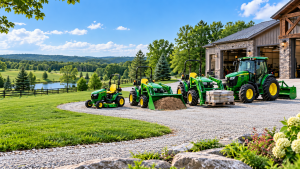

There is no single acreage number that automatically means you need a compact utility tractor. Two acres can create a strong case for a tractor if you are mowing a large area, moving material, clearing snow, and improving the property. A larger property with relatively little maintenance may create a very different equipment need.
That is why acreage should be treated as a starting point, not the final answer. The better question is: what work do you need to do on those acres?
In Proven Power’s compact utility tractor discussion, Andy gives a useful example. If someone is outside push mowing a couple-acre property on a hot day, that is the kind of situation where they may regret not having equipment that can do the work more efficiently. His larger point is that the transition to a compact utility tractor often happens when property owners are spending too much time doing jobs manually or relying on several separate pieces of equipment.
Is 2 Acres Enough to Justify a Compact Tractor?
It can be, but the current Proven Power interview does not establish two acres as a minimum acreage recommendation.
What the interview does support is that even a couple-acre property can create enough work to make better equipment worth considering. Andy specifically uses the example of someone push mowing a couple acres. If mowing is the only job, the equipment decision may be different. But if those same acres also involve moving mulch or dirt, lifting heavy materials, snow removal, and ongoing property improvements, a compact tractor becomes easier to justify.
The key is workload. Two acres of finished lawn with few projects is not the same as two acres with a long driveway, landscaping work, material handling, and year-round maintenance.
What About 5 Acres?
Five acres is a common way property owners frame the question, but the interview does not provide a specific five-acre tractor recommendation. It would be misleading to claim that every five-acre property needs a compact tractor or that a particular tractor size is automatically correct.
Instead, look at how the property is used. How much of it is actually mowed? Are there areas that need regular maintenance? Are you moving dirt, mulch, or other material? Do you have snow to remove? Are you planning improvements? Are you doing jobs with shovels, rakes, wheelbarrows, or other equipment that take more time and effort than they should?
As those jobs accumulate, acreage becomes less important than the amount and type of work happening on it.
Does a 10-Acre Property Automatically Need a Compact Tractor?
Not automatically. Ten acres sounds like tractor territory, but total acreage still does not tell the whole story.
A property owner may actively maintain only part of those ten acres. Another owner may be constantly mowing, moving material, clearing snow, and working on improvements across the property. Those two owners can have very different equipment requirements even though the acreage number is identical.
A definitive 10-acre recommendation should come from a more detailed Proven Power discussion about terrain, maintained acreage, jobs, implements, tractor size, and expected workload. The current interview supports using those factors to make the decision, but it does not support assigning a specific tractor or series based on ten acres alone.
Acreage Matters Less Than the Jobs You Need to Do
Andy describes compact utility tractors as multi-purpose machines. Common uses he identifies include lawn mowing, loader work, moving dirt and mulch, using pallet forks to move heavy items, and snow blowing in Wisconsin.
That list explains why acreage alone can be misleading. A person with a relatively small property may have several jobs that fit a compact tractor. A person with more acreage may have fewer active maintenance needs.
Before using acreage to decide whether you need a tractor, make a list of the actual work.
- How much grass do you mow?
- How long does mowing currently take?
- Do you regularly move dirt, mulch, or other material?
- Are you lifting or carrying heavy items by hand?
- Do you need to remove snow?
- Do you have property improvements planned?
- Are you using several separate machines or a collection of manual tools to maintain the property?
Those questions get closer to the reason people actually buy compact tractors.
The Real Trigger Is Often Time and Physical Effort
A compact tractor starts to make sense when the current way of doing the work becomes inefficient.
Andy talks about seeing people working with shovels and rakes or push mowing a couple-acre property. His point is not that using a shovel means everyone needs a tractor. It is that there is a point where manual work becomes slow, physically demanding, and difficult to justify when the property regularly requires that type of effort.
A compact utility tractor can mechanize more of those jobs. That can mean getting work done quicker and reducing wear and tear on the operator.
Another Sign: Your Garage Is Filling Up With Separate Equipment
The decision is not always about replacing manual labor. Sometimes it is about consolidating equipment.
Andy describes customers transitioning from several different pieces of equipment in the garage to one tractor that can use different implements. That versatility is one of the strongest arguments for a compact utility tractor.
If you need one machine to mow, another solution to move material, something else for snow, and manual tools for property projects, it may be worth asking whether a compact tractor with the right implements could handle more of that workload.
So, How Many Acres Do You Really Need?
Based on the current Proven Power interview, there is not enough information to give an honest minimum acreage such as two, five, or ten acres.
What we can say is that Andy sees compact utility tractors becoming relevant when property owners have more land and more upkeep, need to mow more efficiently, want to stop lifting and moving heavy material by hand, have improvements to make, or are ready to replace several separate pieces of equipment with one multi-purpose machine.
That means a couple-acre property can absolutely be large enough to start the conversation. It does not mean every couple-acre property needs a compact tractor.
The right decision comes from matching the machine to the work, not simply matching a tractor to an acreage number.
What to Tell Proven Power When You Are Choosing a Tractor
Instead of walking into the dealership with only your acreage, bring a picture of the entire workload. Be ready to explain how much land you actively maintain, what you mow, what you move, what you lift, how you handle snow, and what projects you expect to tackle.
That information gives an equipment professional a much better starting point than acreage alone. Once the jobs are clear, the conversation can move toward tractor size, horsepower, implements, and the features that actually matter for your property.